
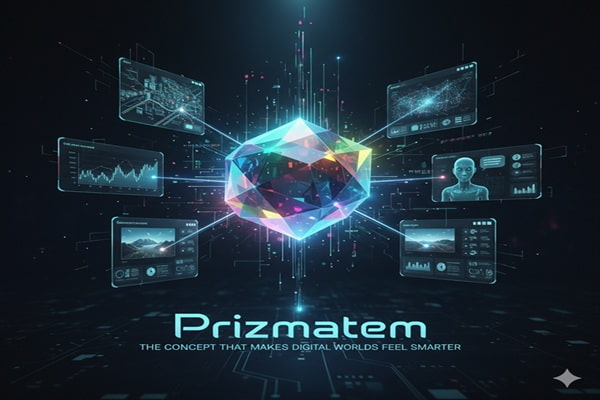
Let me guess you came across the word prizmatem, paused for a second, and thought, “Okay… that sounds cool, but what does it actually mean?” I had the same reaction the first time. It felt mysterious, slightly futuristic, and honestly a bit like something pulled from a sci-fi writer’s notebook. But once I dug in, I realized Prizmatem isn’t just a fancy word. It’s a way of thinking that’s quietly shaping how we design, create, and interact with digital spaces.
So grab a coffee, imagine we’re chatting like two curious nerds, and let’s unpack Prizmatem together no jargon overload, no stiff explanations, just real talk.
What Exactly Is Prizmatem?
At its core, Prizmatem is a multidimensional framework for understanding and designing digital experiences. Instead of looking at information, creativity, or interaction from one flat angle, Prizmatem encourages you to see everything in layers kind of like light passing through a prism.
When I first wrapped my head around it, the idea clicked fast. Complex systems feel overwhelming because we try to process everything at once. Prizmatem says, “Relax. Split it. Look at each layer separately.” Suddenly, chaos feels manageable. Ever wondered why some interfaces just feel easier to use? This mindset plays a big role.
Why the Name “Prizmatem” Makes Perfect Sense
The name isn’t random, and it’s not just there to sound edgy. A prism takes a single beam of light and breaks it into a spectrum of colors. Prizmatem does the same thing but with ideas, data, and experiences.
Instead of flattening everything into one rigid view, Prizmatem reveals multiple perspectives hiding inside a single concept. I love that idea because it mirrors how humans actually think. We rarely see things one way, right? So why should our digital systems do that?
The Big Idea Behind Prizmatem
Here’s the philosophy in simple terms:
Complexity isn’t the enemy. Poor structure is.
Prizmatem doesn’t try to erase complexity. It organizes it. That’s a huge difference. IMO, that’s why the concept resonates with designers, developers, creators, and even philosophers.
Prizmatem focuses on:
-
Layered understanding
-
Context-aware interaction
-
Creative clarity
-
Human-centered design
Sounds lofty, sure but the applications stay surprisingly practical.
How Prizmatem Actually Works
Let’s talk mechanics without putting anyone to sleep.
The Layered Approach
Prizmatem breaks systems into layers, each serving a clear purpose. While interpretations vary, most discussions revolve around three core layers.
1. Input Layer: Where Raw Data Lives
This layer handles raw inputs user actions, data streams, visuals, sound, or even emotional cues. I think of it as the “sensory layer.” Everything starts here.
Without structure, raw data feels noisy. Prizmatem organizes it before it overwhelms the system or the user.
2. Meaning Layer: Where Context Kicks In
This layer interprets what the input actually means. A click isn’t just a click anymore. It’s intent. Timing, behavior patterns, and context start to matter here.
Ever noticed how smart apps seem to “get” what you want? That’s this layer doing its thing. Ever wondered why dumb apps feel annoying? Yeah… they skip this step.
3. Execution Layer: Where Action Happens
This layer responds. It adapts visuals, triggers actions, or adjusts experiences in real time. I love this part because it turns passive systems into responsive environments.
Instead of forcing users to adapt to software, the software adapts to users. Wild concept, right?
Why Designers Are Obsessed with Prizmatem
If you hang around creative or UX circles long enough, you’ll notice a pattern. People keep chasing clarity. Prizmatem delivers that by design.
Better UX Without Overthinking It
Designers use Prizmatem thinking to:
-
Simplify complex dashboards
-
Create adaptive layouts
-
Improve user flow without clutter
I’ve personally noticed that interfaces built with layered logic feel calmer. Less “where do I click?” and more “oh, that makes sense.”
Prizmatem in Digital Creativity
This is where things get fun.
Breaking Creative Blocks
Creatives often hit walls because ideas feel tangled. Prizmatem encourages creators to separate:
-
Concept
-
Execution
-
Emotion
-
Interaction
Once you do that, ideas start flowing again. FYI, this method saved me from staring at a blank screen more than once 🙂
Visual Design That Feels Alive
Prizmatem-inspired visuals often feel dynamic rather than static. Colors, depth, motion, and layout respond to context instead of staying frozen.
Think:
-
Interfaces that shift based on user behavior
-
Art that changes with interaction
-
Digital spaces that feel layered, not flat
That’s not accidental. That’s Prizmatem logic at work.
Prizmatem and Modern Technology
Now let’s zoom out.
AI and Prizmatem: A Natural Match
AI systems thrive on layers data, interpretation, response. Prizmatem fits perfectly into this structure.
When developers combine AI with Prizmatem thinking, systems become:
-
More intuitive
-
Less robotic
-
More human-aware
And yes, that irony isn’t lost on me.
AR, VR, and Immersive Tech
Immersive environments rely heavily on perspective. Prizmatem offers a framework that makes those environments feel coherent, not chaotic.
Users don’t want sensory overload. They want depth with control. Prizmatem balances both beautifully.
Cultural Meaning of Prizmatem
Here’s something I didn’t expect: Prizmatem isn’t just technical anymore. It’s becoming cultural.
People now use the word to describe:
-
A mindset shift
-
Personal growth
-
Creative evolution
I’ve even seen it used as usernames, brand names, and metaphors. When a concept starts leaking into language like that, you know it struck a nerve.
Also Read : Žižole Explained: Benefits, Uses, Taste & Cultural Value
Prizmatem vs Traditional Linear Thinking
Let’s do a quick comparison, friend to friend.
Traditional Thinking
-
Linear
-
One input, one output
-
Rigid structure
Prizmatem Thinking
-
Layered
-
Context-driven
-
Adaptive
Which one feels more aligned with real life? Exactly.
Common Misunderstandings About Prizmatem
Let’s clear a few things up.
“It’s Just a Design Trend”
Nope. Trends fade. Frameworks evolve. Prizmatem falls into the second category.
“It’s Too Abstract to Use”
Only if you overthink it. At its heart, Prizmatem just asks you to break things into meaningful layers. You already do this mentally now you do it intentionally.
How to Apply Prizmatem Thinking Today
You don’t need a lab, a team, or fancy software.
Try this:
-
Take a complex problem.
-
Split it into visible layers.
-
Ask what each layer needs.
-
Design or act accordingly.
That’s it. No certification required.
Where Prizmatem Shines the Most
From everything I’ve seen, Prizmatem works best in:
-
UX/UI design
-
Digital art
-
Interactive storytelling
-
Product design
-
Creative strategy
Basically, anywhere complexity meets humans.
Challenges and Limitations
Let’s stay honest.
Prizmatem can:
-
Feel overwhelming at first
-
Require mindset shifts
-
Encourage over-layering if misused
The key is balance. Just because you can layer everything doesn’t mean you should.
The Future of Prizmatem
I see Prizmatem becoming less of a buzzword and more of a design instinct. As digital experiences grow more personalized, layered thinking will feel less optional and more necessary.
Future systems won’t ask, “What did the user click?”
They’ll ask, “Why did the user do that and what do they need next?”
That’s very Prizmatem energy.
Final Thoughts: Why Prizmatem Matters
Let’s wrap this up like adults who still enjoy cool ideas.
Prizmatem isn’t magic. It’s not a shortcut. It’s a lens one that helps you see complexity without panic and creativity without chaos. Whether you design, build, write, or think for a living, this framework gives you room to breathe.
So next time something feels overwhelming, don’t flatten it. Refract it. You might be surprised by how much clarity lives inside the mess.