
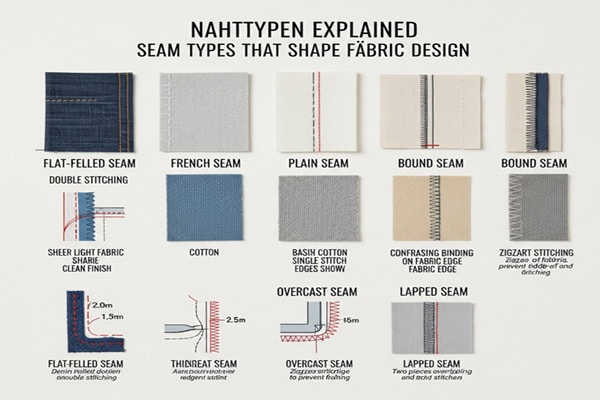
Ever looked at a piece of clothing and thought, “Why does this feel right?” Or stared at a DIY sewing project wondering why it suddenly looks… sad? Yeah, same. Nine times out of ten, the answer hides in the nahttypen the seam types quietly holding everything together. They don’t shout for attention, but they absolutely run the show.
I’ve messed up enough sewing projects to learn this the hard way. One wrong seam choice and boom fabric puckers, edges fray, dreams crumble. So let’s talk about nahttypen like two friends at a crafting table, coffee nearby, fabric scraps everywhere.
What Are Nahttypen and Why Should You Care?
Nahttypen simply mean types of seams. Sounds basic, right? But seams don’t just join fabric; they define strength, flexibility, comfort, and style.
Ever worn a shirt that twists weirdly after one wash? Or jeans that rub in all the wrong places? That’s not bad luck. That’s bad seam decisions. IMO, seams matter as much as fabric choice maybe more.
The Role of Nahttypen in Sewing Projects
More Than Just Holding Fabric Together
I used to think seams only needed to “stay put.” Rookie mistake. Seams actually decide how a garment moves, stretches, and survives daily wear.
The right nahttyp:
-
Supports fabric weight
-
Handles tension and movement
-
Prevents fraying
-
Improves comfort
The wrong one? Well… let’s just say scissors come back out :/
Function Meets Design
Some seams hide quietly. Others show off on purpose. Decorative seams can elevate a simple project into something special, while functional seams keep things wearable.
Ask yourself: do you want invisible support or visible personality?
Basic Nahttypen Every Sewist Should Know
Plain Seam (Simple Seam)
This seam shows up everywhere. I use it constantly, especially when I want clean, fast results.
Why it works:
-
Easy to sew
-
Clean appearance
-
Works for light to medium fabrics
Why it fails:
-
Frays easily
-
Doesn’t love heavy stress
I always finish it with zigzag or overlock. Always.
French Seam
Ah yes, the seam that feels fancy even when you mess it up once or twice. I love French seams for delicate fabrics.
Best for:
-
Sheer fabrics
-
Lightweight cotton
-
Lingerie and blouses
Big win:
It hides raw edges completely, which feels oddly satisfying.
Flat-Felled Seam
Denim fans, this one’s for you. Jeans rely on this seam because it refuses to quit.
Why it rocks:
-
Super strong
-
Lies flat against skin
-
Handles heavy wear
FYI, it takes practice. Your fingers might complain.
Decorative Nahttypen That Add Style
Topstitched Seam
Topstitching screams confidence. I use it when I want seams to own the look.
Perks:
-
Adds visual structure
-
Reinforces stress points
-
Looks intentional and bold
Choose thread wisely. Bad contrast ruins the vibe fast.
Lapped Seam
This seam overlaps fabric instead of aligning edges. It works beautifully in leather and thick textiles.
Why designers love it:
-
No bulky seam allowance
-
Strong and clean finish
-
Perfect for statement pieces
Ever noticed seams on leather jackets? Yep, that’s this guy.
Functional Nahttypen for Specific Needs
Stretch Seam
Stretch fabrics demand respect. Use the wrong seam and you’ll hear that dreaded pop.
Stretch seams:
-
Move with the fabric
-
Prevent thread breakage
-
Keep garments wearable
I learned this after snapping seams mid-stretch. Not my proudest moment 🙂
Overlocked Seam
Overlock seams feel like the unsung heroes of sewing. They don’t show off, but they work hard.
Why they matter:
-
Prevent fraying
-
Speed up production
-
Create clean finishes
If you sew a lot, invest in a serger. Trust me.
Choosing the Right Nahttypen for Your Fabric
Match the Seam to the Material
Fabric tells you what it wants if you listen.
Quick guide:
-
Lightweight fabrics: French seams
-
Heavy fabrics: Flat-felled or lapped seams
-
Stretch fabrics: Stretch or zigzag seams
-
Decorative projects: Topstitched seams
Ever ignored fabric advice? Same. It never ends well.
Think About Wear and Tear
Ask yourself a few honest questions:
-
Will this get washed often?
-
Does it stretch or pull?
-
Does it rub against skin?
The answers point straight to the right nahttyp.
Nahttypen in Fashion vs DIY Sewing
Fashion Industry Perspective
Fashion brands obsess over seams. They choose nahttypen based on cost, speed, durability, and aesthetics.
That’s why:
-
Fast fashion uses simpler seams
-
High-end garments invest in hidden finishes
-
Athletic wear prioritizes stretch seams
Nothing happens by accident.
Home Sewing Reality
At home, you get creative freedom. I mix seam types all the time to balance effort and outcome.
Sometimes I choose:
-
Strong seams where stress hits
-
Pretty seams where style matters
-
Quick seams when patience runs low
Balance beats perfection.
Common Nahttypen Mistakes (I’ve Made Them All)
Using the Same Seam Everywhere
I used to slap plain seams on everything. Shirts, bags, curtains didn’t matter. Results? Mixed at best.
Different projects demand different solutions.
Ignoring Seam Finishes
Raw edges don’t forgive. They fray, stretch, and ruin your work over time.
Always finish seams. Always.
Forgetting Comfort
A seam can look amazing and feel awful. Thick seams against skin irritate fast.
Comfort matters more than Instagram pics.
How Nahttypen Impact Durability
Seams take stress before fabric does. They stretch, pull, and resist tearing.
Strong seams:
-
Extend garment life
-
Reduce repairs
-
Maintain shape over time
Weak seams? You’ll meet them again with a needle.
Sustainability and Smart Seam Choices
This part gets overlooked, but it matters.
Better seam choices:
-
Reduce garment waste
-
Increase repairability
-
Support long-term use
When clothes last longer, they stay out of landfills. Small choices add up.
My Go-To Nahttypen Cheat List
When I’m unsure, I default to this:
-
Daily wear: Flat-felled seams
-
Delicates: French seams
-
Stretchwear: Stretch seams
-
Decorative items: Topstitched seams
Simple, reliable, no drama.
Also Read : Lufanest Explained: Comfort, Design & Sustainable Living
Why Learning Nahttypen Changes Everything
Once you understand seams, sewing stops feeling random. You gain control.
You start asking:
-
“What does this fabric need?”
-
“How will this wear over time?”
-
“Do I want strength or style here?”
Those questions level you up fast.
Final Thoughts on Nahttypen
Nahttypen don’t steal the spotlight, but they absolutely deserve respect. They shape how fabric behaves, how garments feel, and how long projects survive.
Next time you sew or even shop take a closer look at the seams. You’ll spot quality instantly. And hey, once you start noticing seams everywhere, don’t blame me.
Grab some fabric, test a few seam types, and see what clicks. Sewing feels way more fun when things actually hold together